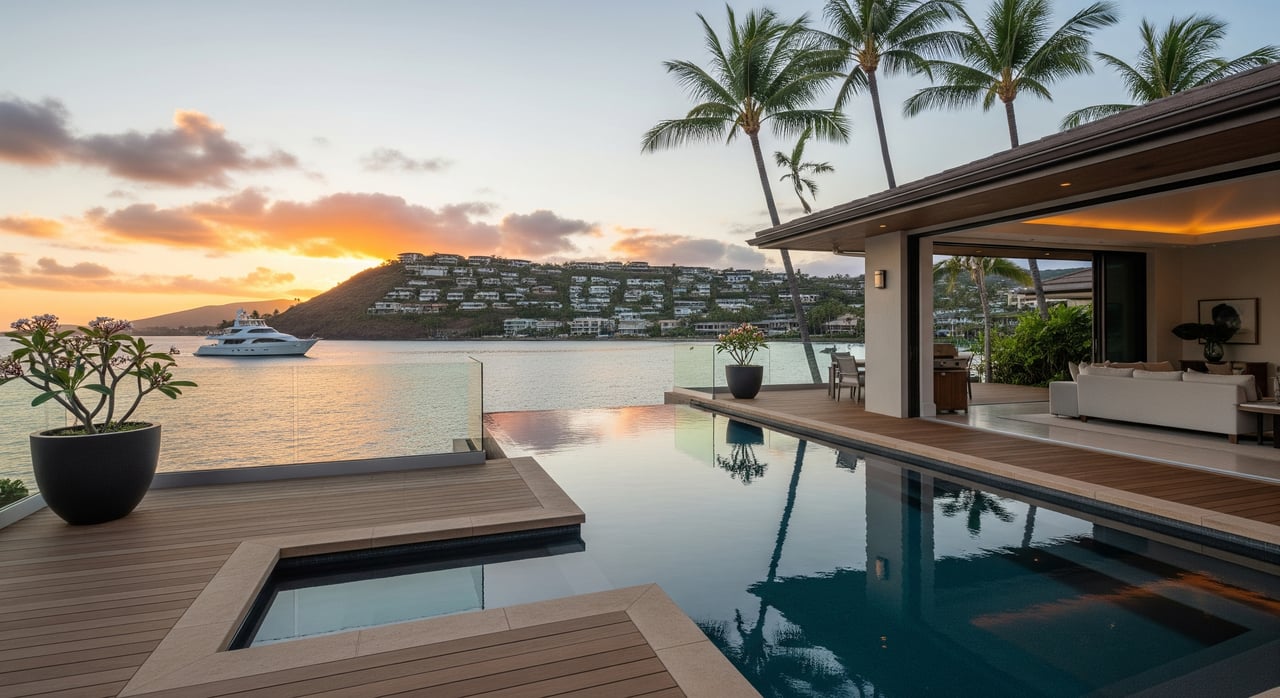
Thinking about life in Hawaii Kai and torn between a dock in your backyard or big-sky views from the ridge? You are not alone. Many move-up and relocation buyers face the same decision, each option offering a distinct lifestyle and a different set of costs and responsibilities. In this guide, you will learn the real tradeoffs between waterfront and hillside living in Hawaii Kai so you can choose with confidence. Let’s dive in.
Hawaii Kai at a glance
Hawaii Kai sits on O‘ahu’s southeast shore, centered around Koko Marina and Maunalua Bay. Canal and marina neighborhoods curve along the water, while hillside communities rise up the slopes toward Koko Head and the Koʻolau range. Housing near the water often dates to the 1960s–1980s, while many hillside homes include newer custom builds and remodels that take advantage of elevation and views. Buyers come for the suburban feel, boating and water sports, trail access, beaches, and proximity to everyday services.
Waterfront living: daily life and access
If you want the boating lifestyle, waterfront homes offer unmatched convenience. Many canal or marina-front properties have direct access to Koko Marina and Maunalua Bay, and some include private docks or nearby slip options. You can paddle, fish, or motor out with minimal prep, which makes spontaneous water time part of your routine.
You will want to confirm how access works at each property. Dock ownership, slip leases, and mooring rights vary. Some homes have private docks, others share or rely on marina slips, which can involve fees, rules, and potential waitlists. Budget for dock and boat upkeep along with any association or harbor fees.
Hillside living: daily life and access
Hillside homes trade direct water access for elevation, privacy, and broad views. Many lots are terraced or irregular in shape, which can create unique outdoor rooms and garden areas. You will typically enjoy cooler evenings and wide panoramas across Maunalua Bay, toward Diamond Head, or back to the Koʻolau ridges.
Access can feel different day to day. Streets are often curving and driveways can be steeper than on the flats. In return, hillside parcels may allow larger garages, more guest parking, or expanded outdoor living spaces that step down the slope.
Climate and comfort: breezes and sun
O‘ahu’s trade winds usually come from the northeast, but local topography shapes microclimates in Hawaii Kai. On the water, you often get steady breezes and good cross-ventilation. That airflow can cut cooling costs and make lanais comfortable throughout the day.
Higher on the slope, you may experience broader breezes and cooler nights, yet some pockets sit in the lee and feel warmer with less airflow. Orientation matters. West-facing exposures get stronger afternoon sun, while smart overhangs, shade trees, and window placement can balance light and heat. Solar potential is generally strong in both settings, but shading from terrain or trees may reduce output in some hillside locations.
Property design and outdoor spaces
Waterfront lots are usually flatter and narrower, with yards designed to face the water’s edge. You will see turf, patios, and marine-grade materials that handle salt and spray. Privacy between neighbors can be lighter in canal neighborhoods, since many backyards open toward the water.
Hillside lots are more varied. Terraces, retaining walls, and stepped landscapes are common. That shape can support fruit trees, gardens, and multi-level lanais that frame the views. The tradeoff is extra planning for irrigation, erosion control, and safe circulation between levels.
Maintenance and durability
Salt is the biggest maintenance factor on the water. Coastal exposure accelerates corrosion for exterior metals, lighting, hardware, HVAC components, and railings. Expect more frequent painting, sealing, and hardware replacement. If a property has a seawall, bulkhead, or dock, you will want condition reports and repair histories. These elements can be expensive to maintain and may require permits for repairs or replacements.
On the hillside, water management and slope stability are the focus. Retaining walls, drainage swales, and engineered systems help move stormwater safely. Regular inspections of drainage and walls are important. Good design minimizes runoff issues and reduces long-term risks from heavy rain events.
Risk and insurance
Coastal parcels face higher exposure to coastal flooding, high surf, storm surge, and long-term sea-level rise. FEMA flood maps identify current flood zones, and state and federal science points to increasing coastal hazards over time. Many standard homeowner policies exclude flood damage, so flood insurance through the National Flood Insurance Program or a private carrier may be required or recommended for waterfront properties. Wind and hurricane coverage is also a factor throughout O‘ahu.
Hillside homes avoid direct tidal flooding but can face heavier wind exposure in certain areas, plus slope runoff and erosion during storms. Proper engineering, drainage, and regular maintenance are key to managing those risks.
Access, parking, and daily convenience
Flats near the marina often provide simpler driveway access and less grade change day to day. That can be helpful for loading gear and hosting friends for water days. Lot sizes can be tighter, which may limit on-site parking on some streets.
Hillside homes may feature larger garages, extra driveway space, or expanded guest parking depending on the lot. Keep in mind that steep driveways and curving roads require attention during heavy rain. Both settings are served by Honolulu infrastructure for utilities and services.
Costs, value, and resale
Waterfront homes usually command a price premium per square foot compared to non-waterfront options, with oceanfront at the top and marina or canal-front below that. The buyer pool is passionate and focused on the boating lifestyle, which can drive strong resale when demand is healthy. Sensitivity to coastal risk and maintenance costs can affect pricing trends over time.
Hillside homes often deliver value through big views, privacy, and room to expand. You may have more flexibility for additions or outdoor living projects, subject to local rules. One-time capital investments for drainage or retaining structures may be higher on hillsides, while ongoing marine-specific upkeep is lower than on the water.
Quick comparison: which fits your life?
- Waterfront highlights: Direct boat access, breezy cross-ventilation, flat yards, and water-level views. Plan for salt-related upkeep, potential seawall or dock projects, and flood insurance considerations.
- Hillside highlights: Panoramic views, privacy, flexible lot shapes, and cooler evenings. Plan for drainage, retaining walls, and site access on slopes.
- Budget and risk lens: Waterfront often has higher ongoing maintenance and insurance costs. Hillside may concentrate costs in engineering and drainage, with lower marine-specific wear.
- Lifestyle lens: Waterfront suits frequent boaters and paddle enthusiasts. Hillside suits view-seekers, gardeners, and those who prefer privacy and space.
Due diligence for waterfront buyers
- Confirm the type of water access: private dock, shared dock, marina slip, or mooring, and the legal rights or leases involved.
- Request condition reports for seawalls, bulkheads, docks, and any marine infrastructure, plus repair records and permits.
- Review FEMA flood zones and obtain an elevation certificate if available. Get flood insurance quotes early.
- Verify county and state permitting history for shoreline work and any restrictions on shoreline hardening.
- Budget for accelerated exterior maintenance, including paint cycles, metal treatment, and HVAC corrosion mitigation.
- Visit at different times to understand boating activity, wake impacts, and noise patterns.
Due diligence for hillside buyers
- Ask for geotechnical reports if the property is newer, has been modified, or shows signs of movement.
- Inspect retaining walls, roof drainage, and surface swales. Confirm that water is directed safely away from structures.
- Test driveway slope and access in wet conditions and consider emergency vehicle access.
- Review vegetation management needs and plan irrigation for terraced areas.
- Evaluate solar orientation and shading for comfort and energy planning.
Universal checks for any Hawaii Kai home
- Review seller disclosures for coastal impacts, past repairs, and neighbor structures.
- Consult experienced local contractors for realistic maintenance and improvement budgets.
- Factor in commute patterns, proximity to shops and parks, and your preferred activities.
Which is right for you?
If boating is central to your lifestyle, a waterfront home makes the most of Hawaii Kai. You will step onto your dock, push off into the marina, and be on the bay in minutes. If privacy, flexibility, and panorama matter most, the hillside delivers daily views and room to design multi-level outdoor spaces.
There is no one-size answer. Your time horizon, appetite for maintenance, and insurance comfort all matter. A clear-eyed look at site conditions and long-term climate considerations will help you choose the right fit for your life and budget.
How we help
Choosing between waterfront and hillside in Hawaii Kai is a high-stakes, detail-heavy decision. You deserve a guide who understands microclimates, shoreline structures, drainage engineering, permitting, and resale dynamics. With concierge-level service, polished marketing, and experience across luxury resale and relocations, our team helps you weigh tradeoffs, model costs, and move forward with confidence.
If you are comparing specific properties or planning a sale, reach out to Melvin Leon Guerrero for a tailored strategy and on-the-ground insight.
FAQs
Do Hawaii Kai canal homes usually include a private dock?
- Some do, but not all. Confirm whether the property has a private or shared dock, or relies on a marina slip or mooring, and verify the rights, fees, and rules.
Who maintains seawalls or bulkheads at a waterfront home?
- Owners are often responsible for adjacent shoreline structures. Ask for condition reports, repair records, and permits before you buy.
Will sea-level rise affect waterfront values in Hawaii Kai?
- Long-term coastal risk and rising insurance or repair costs are real factors. Values depend on demand, site-specific conditions, and the availability of adaptive measures and insurance.
Are hillside homes safer during storms than waterfront homes?
- Hillsides avoid direct tidal flooding, but they can face wind exposure and runoff challenges. Safety depends on site engineering, drainage, and maintenance.
Which has better resale potential: waterfront or hillside?
- Waterfront often commands a premium and strong demand among boaters. Hillside homes with wide views and good access also resell well. Market cycles and risk perceptions influence both.