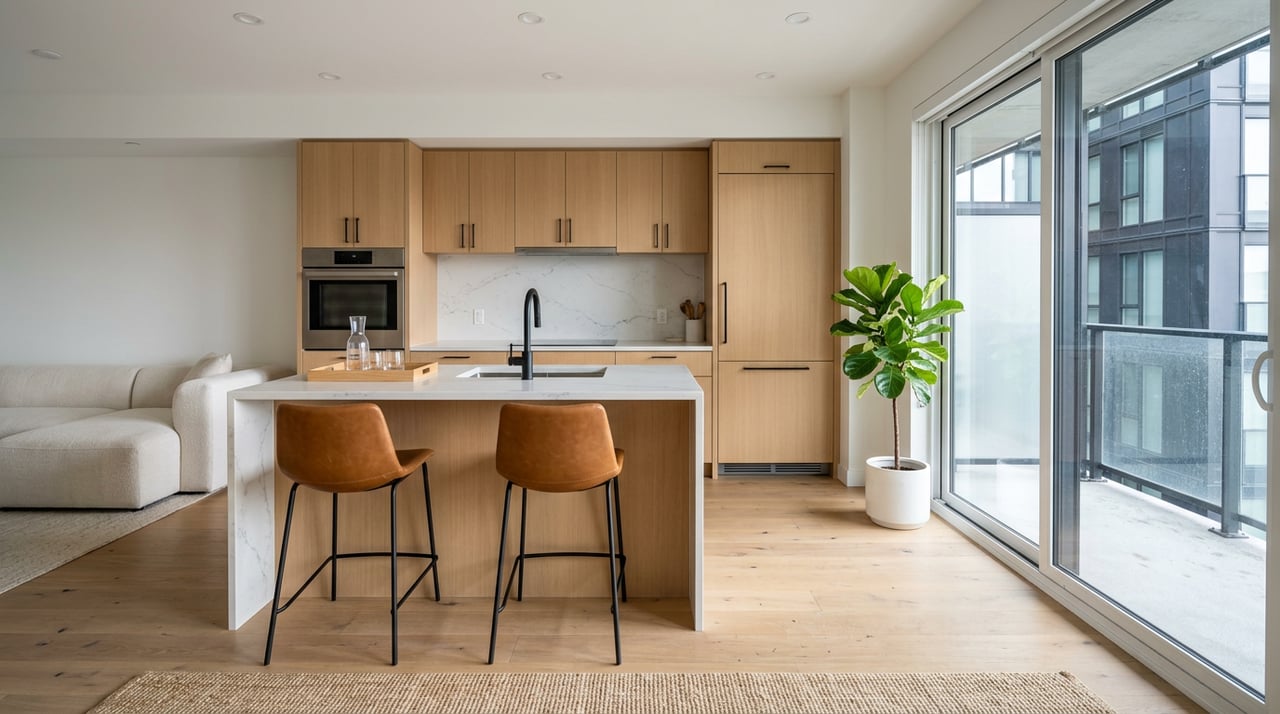
Thinking about a condo or townhome in Seattle but not sure how HOAs, building types, or financing actually work? You are not alone. Whether you are moving up from renting or downsizing from a single‑family home, the details can feel complex. This guide breaks it down in plain language so you can compare neighborhoods, understand your ownership and HOA rights, spot red flags, and write a stronger offer with confidence. Let’s dive in.
Why Seattle condos and townhomes now
Condos remain a meaningful slice of the market. In 2025, condos made up about 13.5% of Northwest MLS sales, roughly 9,200 units area‑wide, with a regional condo median near 500,000 and King County closer to the mid‑500s. Inventory rose compared with 2024 while months of supply averaged around 2 to 3 months, which is still below a balanced market. You can see the regional snapshot in the Northwest MLS annual report. NWMLS reported inventory rising with steady prices in 2025.
Prices vary by neighborhood and building type. Downtown high‑rises often trade above the wider region, while smaller buildings or townhomes outside the core can offer more space per dollar. Focus on the specific submarket you want, not a single citywide median.
Condo vs. townhome: what you own
Understanding the ownership model is step one.
- Condominiums. You own the interior of your unit and share ownership of the building’s common elements. The HOA manages the exterior, structure, and shared systems. Dues generally cover common insurance, maintenance, and reserves. Rules and approvals can be detailed.
- Townhomes. Many Seattle townhomes are fee‑simple, which means you own the structure and the land beneath it. Some are within an HOA or condominium regime. Monthly dues can be lower than in larger condo buildings, but you often take on more exterior maintenance costs yourself.
If you are comparing options, check the legal description and HOA documents to confirm whether a townhome is fee‑simple or part of a condo association. That choice affects your responsibilities, insurance, and financing.
Building types and typical features
Seattle offers a wide mix of buildings, each with different costs and lifestyles.
High‑rise towers
You will find these in Downtown, Belltown, and South Lake Union. They are usually steel or concrete construction with elevators, lobby staff, and more extensive amenities. Expect higher dues that reflect concierge services, large shared systems, and amenities like gyms and rooftops. Parking can be a premium in the core.
Mid‑rise buildings
Common in many central neighborhoods. Mid‑rises might have tens to a few hundred units. Amenities vary, and so do dues. You often get controlled access, package rooms, and a fitness room without the full cost of a 24/7 staffed lobby.
Low‑rise and conversion condos
Often older wood‑frame buildings with fewer amenities and sometimes lower dues. The tradeoff can be higher attention to maintenance and reserves. Ask about recent capital projects and any prior assessments for exterior work.
Townhomes and rowhouses
These live more like single‑family homes, often with private entries and garages. Dues can be modest if any, but you may handle more exterior items yourself. Read the governing documents to see who is responsible for roofing, siding, and landscaping.
Neighborhood snapshots and tradeoffs
Downtown, Belltown, South Lake Union
- What you will see. High‑rise and mid‑rise condos with strong walkability, newer projects, and amenity‑rich buildings.
- Tradeoffs. Higher price per square foot, higher HOA dues, and limited inventory in some price bands. Lender project approval can influence the available buyer pool and your financing options.
Capitol Hill, First Hill
- What you will see. A mix of older low‑ and mid‑rise buildings with character and newer infill.
- Tradeoffs. Older buildings can offer a lower entry price but may carry a higher chance of deferred maintenance or future special assessments. Strong transit and nightlife.
Ballard, Fremont, Greenwood
- What you will see. More townhomes and smaller condo buildings. Good access to neighborhood retail and parks.
- Tradeoffs. Balance space and commute time. Townhomes can offer more square footage for the price, with fewer shared amenities and lower dues.
West Seattle, Beacon Hill, Columbia City, U‑District
- What you will see. Townhomes and small condo communities are common. Prices can be more approachable outside the core.
- Tradeoffs. Some buyers accept a longer commute for more living space. Future rail projects, such as the Ballard Link Extension, are worth watching for long‑term accessibility. Review the timeline on Sound Transit’s Ballard Link Extension page.
HOA documents you must review
In Washington, the HOA/condo packet is central to your due diligence. It tells you how the building runs and what it may cost you in the future.
Resale certificate essentials
For condo resales, Washington law requires a resale certificate. It must include assessments, reserves and the reserve study, budget and financials, pending litigation, insurance details, building‑code violations, and more. The association has 10 days to provide it after the seller requests it. As a buyer, you may rescind the contract until the certificate is delivered and for five days after you receive it. Review the statutory details in RCW 64.34.425.
What to request with the certificate:
- Governing documents. Declaration, bylaws, rules, architectural standards, plus all amendments.
- Financials and reserves. Current budget, reserve balance, and the most recent reserve study. Washington law encourages formal reserve studies and updates. See RCW 64.34.380.
- Minutes and assessment history. The last 12 to 24 months of board and membership minutes plus any special assessments that were levied, why, and for how much.
- Insurance details. Master policy limits and deductibles, and whether parking or storage is insured separately.
- Litigation and repair files. Any pending lawsuits or major repair scopes, including engineering reports and bids.
Seller disclosure (Form 17)
Separately from the resale certificate, Washington sellers provide the Seller Property Disclosure (Form 17). It covers the property condition, environmental items, and HOA information, and it comes with a limited buyer rescission window after delivery. Learn more in RCW 64.06.020.
Statute changes to know
Washington is consolidating common‑interest community law under WUCIOA. Major updates passed in 2024 and 2025, and the framework will apply statewide to all common‑interest communities beginning January 1, 2028. Associations may update their documents ahead of that transition, which can affect resale‑certificate content and procedures. See the legislative summary for WUCIOA changes and timing.
Financing and project eligibility
Condo financing looks at you and the building. Early conversations with a condo‑savvy lender help you avoid surprises.
- FHA and VA. FHA maintains a project approval list and allows certain single‑unit approvals. Confirm early whether the building qualifies and whether your down payment and loan size fit the program. Read the FHA update on single‑unit approvals and project standards.
- Conventional with Fannie Mae or Freddie Mac. These investors use project review systems and look at factors like owner‑occupancy, delinquency, commercial space percentage, and single‑entity ownership. Projects with material deferred maintenance or litigation can be labeled non‑warrantable, which reduces financing options and may raise down payment needs. See Fannie’s condo and co‑op eligibility overview.
What to ask your lender up front:
- Can you finance in this building and what documentation is required?
- Are there project issues that could affect approval, such as litigation or high commercial share?
- If FHA or VA, is the project approved or can a single‑unit approval work in my case?
Inspections that matter in Seattle
A good inspection focuses on moisture and building‑envelope performance. Seattle’s rainy climate, along with past construction defects in some buildings, has led to water‑intrusion claims and association litigation. Local cases show that envelope failures can be costly to repair. For context, see this Washington appellate case related to water intrusion: Parisien v. Eighty South Jackson.
What to order and review:
- Unit inspection. A walls‑in home inspection focused on moisture, balcony and window flashing, and plumbing. If minutes or the resale packet hint at envelope or roof issues, consider specialist testing.
- Common‑area review. Ask your inspector whether they can observe accessible common areas, or request permission from the HOA to accompany the inspector.
- Cost expectations. In many metro areas, a condo unit inspection often runs in the mid‑hundreds, with specialty testing added if needed. See a general cost overview from Fixr’s home inspection guide.
Insurance tip: The association’s master policy covers the shell and common elements. Your HO‑6 policy typically covers walls‑in, personal property, liability, and loss‑assessment coverage. Ask for the master policy declarations page and deductible schedule so you can right‑size your HO‑6.
What to ask before you write an offer
Use this quick checklist to protect yourself and keep the timeline on track.
- Ask the seller to request the resale certificate right away. The association has up to 10 days to deliver it under RCW 64.34.425.
- Get preapproved with a lender experienced in condo and project underwriting. If using FHA or VA, confirm the project path early.
- Review the budget, reserve study, and 12 to 24 months of minutes for signs of deferred maintenance, planned projects, or recent special assessments.
- Confirm insurance details and deductibles. Ask whether certain claims can trigger a per‑unit deductible or loss assessment.
- Verify parking and storage. Confirm if spaces are deeded or assigned, and whether they transfer with the sale.
- Check rental and short‑term rental rules if you plan to rent in the future.
- Plan your inspections. Schedule the unit inspection and any specialty reviews during your document‑review window.
After you buy: stay proactive
Keep copies of your governing documents, insurance certificates, and reserve studies. Attend meetings when possible and read minutes so you are never surprised by a capital project or assessment. Under Washington law, a purchaser is not liable for unpaid assessments greater than the amount set forth in the resale certificate unless they had actual knowledge. You can review that protection in RCW 64.34.425.
Ready to compare options or plan a move between Hawaii and the Pacific Northwest? Reach out for a tailored strategy, lender introductions, and a building‑by‑building game plan. Connect with Melvin Leon Guerrero for concierge‑level guidance from search through closing.
FAQs
How do Seattle condo prices compare to townhomes right now?
- It depends on the neighborhood and building type. High‑rise condos downtown often command higher prices per square foot, while townhomes outside the core can offer more space for the price. Focus on submarket comps rather than a citywide average.
What is a Washington condo resale certificate and why does it matter?
- It is a legally required packet that includes assessments, reserves and the reserve study, financials, insurance, litigation, and more. The HOA has 10 days to provide it, and you get five days to review after receipt. See RCW 64.34.425.
What makes a condo project “non‑warrantable” for financing?
- Projects can be ineligible for agency lending if owner‑occupancy is too low, delinquency is high, there is significant commercial space, or there is major deferred maintenance or litigation. Review Fannie Mae’s condo eligibility overview and ask your lender early.
How much are HOA dues for Seattle condos and townhomes?
- Dues vary widely by building age, size, and amenities. Many Seattle condos fall in the mid‑hundreds per month, with smaller low‑amenity buildings on the lower side and luxury towers higher. Townhome dues can be lower, especially in fee‑simple setups.
Which inspections are most important for Seattle condos?
- A walls‑in condo inspection with a focus on moisture, balcony and window flashing, and plumbing is key. If HOA minutes or the resale packet mention envelope or roof issues, add specialist testing. Water intrusion has been a known risk in some Seattle buildings, as seen in cases like Parisien v. Eighty South Jackson.
How do future transit projects affect condo and townhome choices?
- Properties near planned stations can benefit from long‑term accessibility. Timelines can be multi‑year, so confirm details on official sources like Sound Transit’s Ballard Link Extension and weigh your personal timeline against project schedules.